


 EN
EN
Compact Diesel Tractors Spec Sheet: Match PTO Horsepower vs Hydraulic Flow to Eliminate Attachment Rework
Anyone who has ordered a rear-mounted finish mower or a skid-steer-style loader only to find the attachment sits idle in the barn knows exactly how expensive a spec mismatch feels. After working through dozens of tractor procurement decisions for B2B buyers, the pattern is almost invariably the same: buyers compare engine horsepower and price, overlook PTO output and hydraulic flow on their tractor, and end up buying adapters, swapping pumps, or returning equipment they cannot run. This guide walks through the numbers that actually matter on a compact diesel tractor spec sheet so you can lock in attachment compatibility before the purchase order is signed.
Why Engine Horsepower Is the Wrong Starting Point
Tractor manufacturers advertise gross engine horsepower because it is the biggest number on the brochure. Think of engine HP as the electricity coming into a building , which says nothing about how much power reaches any individual outlet on that tractor. On a compact diesel tractor, two critical loads draw from that engine: the PTO shaft and the hydraulic pump. Both compete for available power, and neither performs at rated capacity if the tractor engine is already undersized or if one system is being pushed harder than the other.
The relationship you need to understand is this: PTO horsepower on a diesel tractor is typically 15–20% lower than engine horsepower because of mechanical losses through the drivetrain. A tractor advertised at 35 engine HP will commonly deliver 28–30 PTO HP at the shaft. That is your real working number for driven attachments like rotary cutters, tillers, and bale spears on a compact tractor.
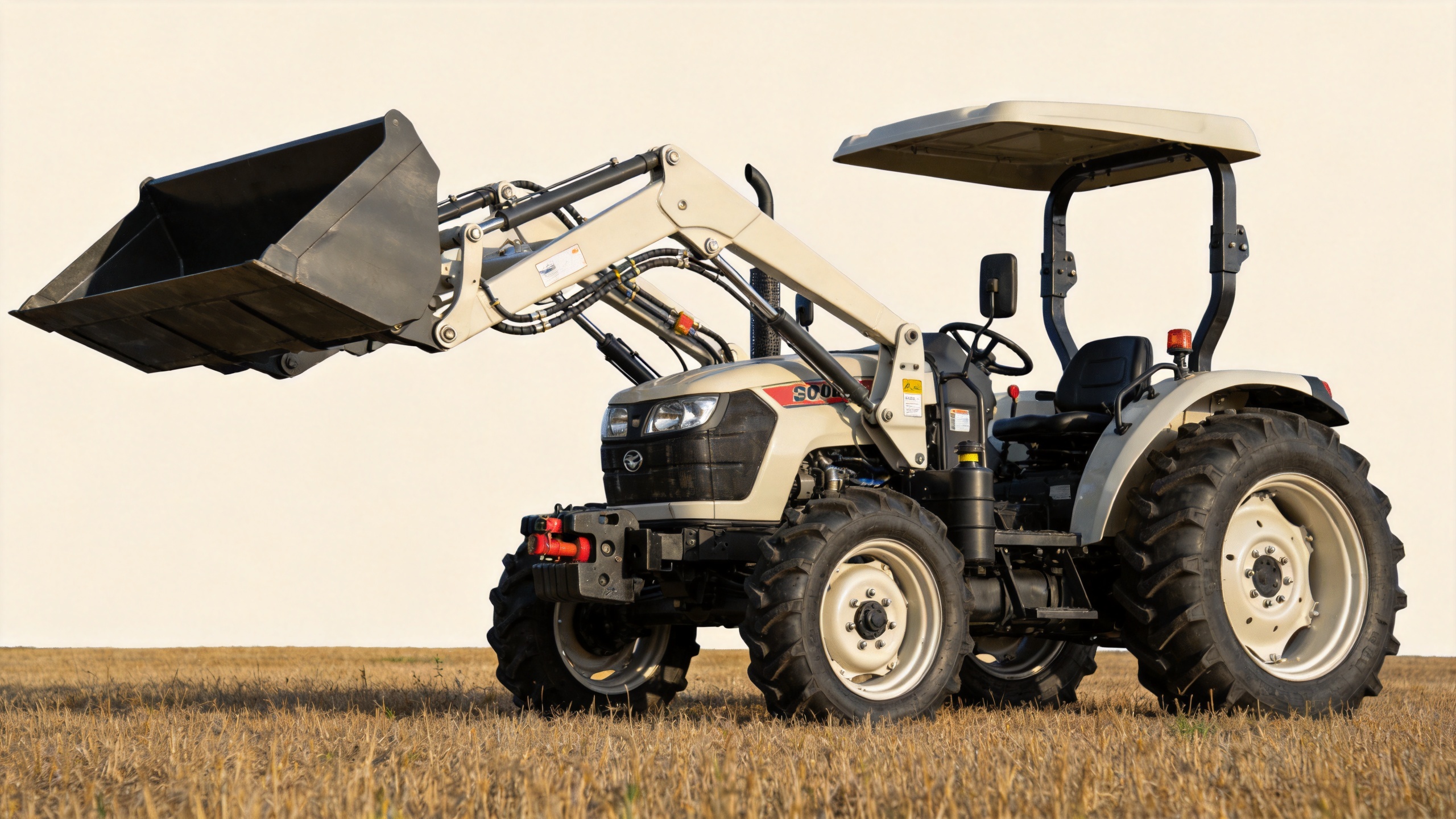
Compact Tractor PTO Horsepower Tiers
Before cross-referencing hydraulic specs, it helps to know which tier your target tractor falls into. Major tractor OEMs — John Deere, Kubota, and New Holland among them — segment the compact diesel tractor market roughly as follows:
| Tractor Segment | PTO HP Range | Typical Engine HP | PTO Category |
|---|---|---|---|
| Sub-compact tractor | Under 25 PTO HP | 18–28 HP | Category 0 / 1 |
| Compact utility tractor (entry) | 25–40 PTO HP | 30–50 HP | Category 1 |
| Compact utility tractor (mid) | 40–55 PTO HP | 50–65 HP | Category 1 / 2 |
The PTO category column matters as much as the HP figure on any tractor spec sheet. Category 1 runs at 540 RPM; Category 2 runs at 1,000 RPM. Running a Category 2 attachment on a Category 1 tractor shaft is possible with an adapter, but the adapter does not restore torque . The result is a higher-speed but lower-force output that tends to stall the attachment under load and burns through PTO shear bolts faster than it should. If your attachment list includes anything rated for Category 2, confirm the tractor ships with a dual-speed PTO or budget for adapters upfront.
Hydraulic Flow: The Number Most Tractor Buyers Miss
Here is the question worth asking before you spec a loader or a backhoe for your tractor: what is the open-center hydraulic flow rate in gallons per minute (GPM)? Many compact tractor brochures bury this figure in a footnote or omit it entirely from the marketing summary. Yet it is the single most important number for tractor attachment compatibility.
General hydraulic flow requirements by attachment class for a compact diesel tractor:
| Tractor Attachment Type | Minimum GPM | Recommended GPM |
|---|---|---|
| Mid-mount mower deck | 6 GPM | 6–8 GPM |
| Front-end loader | 9 GPM | 10–13 GPM |
| Backhoe (compact) | 12 GPM | 13–15 GPM |
| Hydraulic post driver | 8 GPM | 10–12 GPM |
| Grapple bucket | 10 GPM | 11–14 GPM |
A 25-HP compact tractor with a 7 GPM hydraulic pump can run a mower deck without issue, but connecting a backhoe rated for 12+ GPM means the tractor attachment will move slowly, cycle incompletely, or overheat the hydraulic fluid. The risk is not just inconvenience — chronic flow starvation degrades tractor pump seals and hydraulic cylinder packings faster than normal wear would, adding repair costs that dwarf the price difference between two tractor models at purchase time.
Matching the Numbers: A Practical Cross-Reference Method for Tractor Buyers
When comparing two or three tractor models side by side, pull these five figures from the tractor spec sheet and lay them in a simple grid:
- PTO HP at rated RPM — not tractor engine HP
- PTO speed options — 540 RPM, 1,000 RPM, or both (economy tractor PTO)
- PTO shaft category — Category 0, 1, or 2
- Hydraulic pump flow rate (GPM) — open-center tractor system
- Three-point hitch category — Category 0 is sub-compact tractor; Category 1 is standard compact tractor; Category 2 is utility tractor
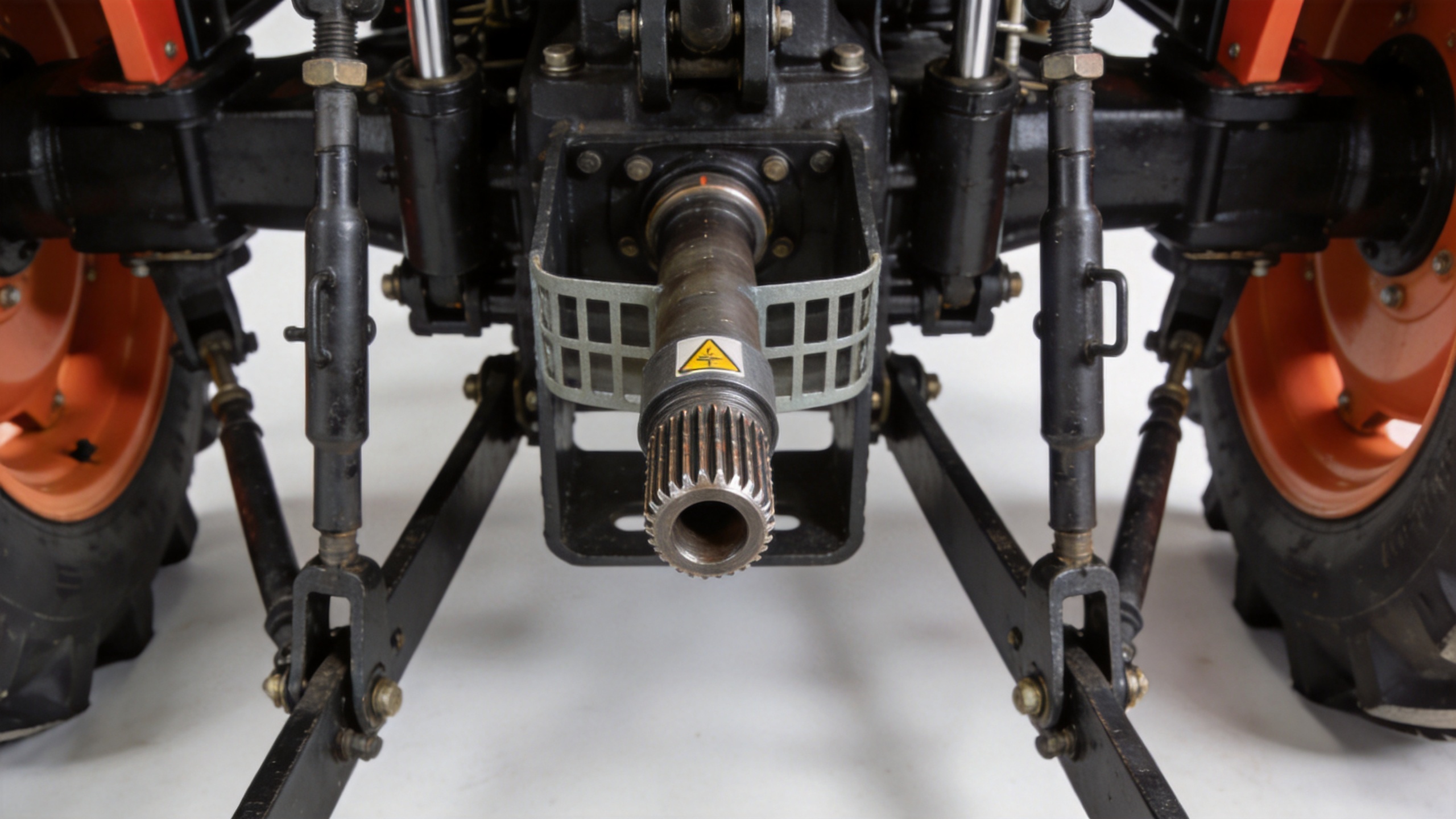
Run each planned attachment against those five tractor numbers before finalizing the spec. The three-point hitch category is worth a separate note: Category 0, Category 1, and Category 2 tractor hitches differ in lower link pin diameter and top link attachment geometry. An attachment built for Category 2 will not mount cleanly on a Category 1 tractor hitch without adapter pins, and most adapter sets cost $80–$200 per attachment plus labor. On a five-attachment tractor purchase, that is a line item that adds up quietly.
Three-Point Hitch and PTO Together: The Combined Load Problem on a Compact Tractor
One scenario that catches tractor buyers off guard is running a rear PTO-driven attachment at the same time as operating the loader. A rotary tiller on the three-point hitch and a loader bucket in the air puts both the PTO shaft and the hydraulic pump of the tractor under simultaneous load. At 35 engine HP, that leaves very little reserve — the tractor engine will bog under harder soil conditions, and hydraulic response to the loader will feel sluggish because the engine is also driving the PTO at full demand.
If your operation requires concurrent use of a driven rear attachment and a front loader on a compact diesel tractor, look for a tractor model in the 45–55 PTO HP range with hydraulic flow at or above 12 GPM. The extra horsepower headroom is not a luxury when both tractor systems are engaged at once.
What to Check on the Tractor Spec Sheet Before You Order
A useful final checklist for any compact diesel tractor evaluation:
- Confirm tractor PTO HP (not engine HP) against each attachment's minimum input requirement.
- Verify tractor hydraulic flow GPM against the highest-demand attachment you plan to run.
- Match tractor PTO shaft category and speed to the attachments — adapters are a workaround, not a solution.
- Check tractor three-point hitch category for pin diameter and geometry compatibility.
- If running loader and rear attachment simultaneously on your tractor, add 20% to your minimum HP estimate as a buffer.
- Ask the dealer for the tractor hydraulic system pressure rating (PSI) alongside flow — some auxiliary tractor hydraulic circuits require both minimum GPM and minimum PSI to cycle correctly.
Matching these numbers on paper takes less than an hour. Returning an incompatible attachment, sourcing adapters, or upgrading a hydraulic pump after your tractor is delivered takes considerably longer and costs considerably more than the spec review ever would have. Treat the compact diesel tractor spec sheet as a compatibility checklist, not just a marketing summary, and the attachment rework problem largely disappears before it starts.
For buyers sourcing compact diesel tractors for import or resale, verifying tractor attachment compatibility at the spec level also reduces post-shipment disputes and return freight costs — factors that matter as much in a B2B procurement context as they do on the farm. If you have questions about sourcing or shipping tractor equipment, feel free to reach out to our team for guidance.